
Showing posts with label Wholesale Gemstone Beads. Show all posts
Showing posts with label Wholesale Gemstone Beads. Show all posts
Wednesday, April 19, 2017
4 Gemstones That Heal Relationships with Guaranteed Results
Strong relationships exemplify the quality of life. The interaction of one human with another is based on many factors like social background, moral ethics and professional etiquettes. However, many individuals fail to build and sustain their relationships beyond a certain level. Failed relationships are not only detrimental to the self-confidence of the persons; it is also bad for health. That’s why astrologers recommend individuals with failed relationships to consider gemstones to soothe their attitude towards life.
Here are 4 gemstones that heal relationships with guaranteed results.
1. Peridot:
Peridot gemstone was worn by the kings and high priests in the ancient era. Rightly called the Healer’s Stone, Peridot can heal virtually any strained relationship in a very short time. Estranged couples are reunited with each other after wearing peridot. It is a miraculous gemstone with assured results in dealing with strained relationship with family members.
Here are 4 gemstones that heal relationships with guaranteed results.
1. Peridot:
Peridot gemstone was worn by the kings and high priests in the ancient era. Rightly called the Healer’s Stone, Peridot can heal virtually any strained relationship in a very short time. Estranged couples are reunited with each other after wearing peridot. It is a miraculous gemstone with assured results in dealing with strained relationship with family members.
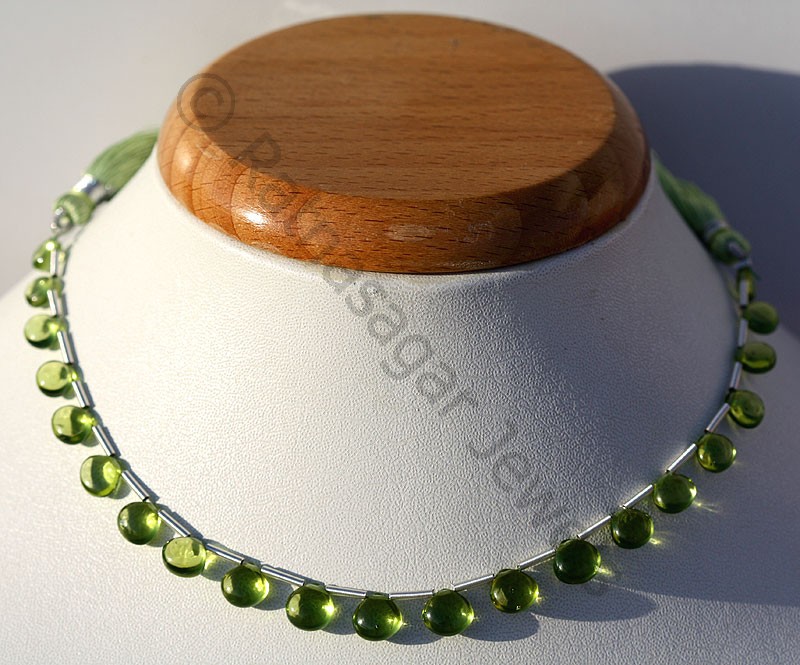
Peridot, owing to its yellow-green color is believed to influence the functioning of the liver, kidneys and the lungs. Individuals who suffer from failed relationships often fall into the addiction trap. They smoke, start drinking or do drugs to overcome the pain of break ups. Peridot can shield a person from such cataclysmic events.
2. Amber:
Are people questioning your faithfulness in relationships? Are you fighting it hard to retain the loyalty factor in your day to day life? If yes, pick amber as your savior gemstone. Amber is the fossilized plant sap that has turned into a gemstone. Highly revered for its purity and clarity, amber is the cleansing stone that promotes relationships and fortune.
Ruled by the planet Sun, amber gemstone beads can be worn to strengthen the karmic action following a breakup or loss of the person.
3. Azurite:
Azurite is a shimmering blue gemstone that has found its way into the market owing to its iconic appearance. A divine stone, by all means, wearing azurite clears the confusion and doubts arising in a relationship related to infidelity, poor communication, and mistrust.
Azurite beads are often worn to spark intuition about the partner’s intention in the relationship. While it is not fair to judge any person, azurite is the ‘secret weapon’ that has the ability to diffuse initial doubts about people. Ideal for businessmen and people engaged in legal affairs, azurite symbolizes the ‘third eye’ of Lord Shiva.
4. Pink Tourmaline:
This is the absolute ‘girl power’ that every woman must adorn to protect their relationship interests. For women living under constant doubt about the intentions of their partners, pink tourmaline is an excellent accessory. It heals the relationship by mellowing the damaged dimensions.

Pink Tourmaline gemstones improve the confidence even during the roughest and toughest phases of the relationship. The gemstone is basically a physical healer that induces positivity towards life. For women suffering from hormonal disorders, wearing tourmaline can ease the pain that comes with disrupted intimacy.
What are the other options?
Astrologers specifically recommend a set of recognized gemstones to overcome relationship disruptions. Blue sapphire, pink Kunzite, malachite and ruby are other popular relationship healer stones.
 Categories : Wholesale Gemstone Beads
 1:54 AM
 Unknown


Thursday, March 16, 2017
Top 6 Tips on Choosing a Red Beryl
Rubellite tourmaline or red beryl, as it is commonly called in the gemstone market, is a big name in the rarity segment. It is hard to identify the red beryl from its emerald varieties. Owing to its red and pink colour, there is a high risk involved in its market. Most red beryls available in the market are either flawed or artificially treated using heat treatments that won’t last a lifetime.
Here are 6 tips on choosing a red beryl gemstone that is worth your time, effort and money.
1. Colours:
A true rubellite is a dark saturated raspberry pink gemstone, with clear lustre and consistent pink shade. It could have darker shades like purple and violet, but the pink one remains most elusive stone in the market. Rubellite gemstone in darker shaded should be avoided as they are mostly likely to be treated with artificial resins and dyes.
2. Clarity:
High clarity gemstones in red beryl segment are not rare anymore. Low clarity gemstones of course are priced much lower than the clearer ones. High IF to VVS clarity ratio are available only with lab-standard gemstone sellers who decide the pricing of the red beryl based on the carat size, facets visible and the degree of pleochroism.
3. Treatments:
Red beryl gemstones do undergo certain degree of enhancement, in the form of heat treatment and irradiation. The Rubellite market is full of irradiated gemstones, which directly affects their optical properties. Ionizing the crystal lattice alters its optical properties resulting in uniform colouration and stable lustre. Colourless and pink beryls turn into brilliant blue gemstones on irradiation with Cobalt-60.
4. How to spot treatments:
Red beryls are hard to test in terms of quality and enhancements done. Impossible to detect under naked eyes, they can be tested only under Fourier Series IR Spectroscope. Natural, untreated gemstone doesn’t cause any colour shift. There are possibilities of finding intrusions and tunnels inside the tunnel, which suggest that the gemstone has undergone heat treatment or irradiation of some sorts.
5. Durability test:
Red beryl can withstand significant amount of impact force, owing to its hardness of 7.5 on Mohs scale. It does not shatter or break away like glass. If it does, it is silica or quartz, not red beryl. Another point to be noted is its lack of cleavage. Low clarity red beryls have slight cleavage, which could be labelled as weakness or flaws.
6. Sizes and cuts:
Red tourmaline gemstone or red beryl is available in size less than standard 3-carat gemstone. Most common size for red beryl is 0.9 carat. Bigger stones run the risk of poor clarity and lustre, and require extensive polishing in the long run.
Here are 6 tips on choosing a red beryl gemstone that is worth your time, effort and money.
1. Colours:
A true rubellite is a dark saturated raspberry pink gemstone, with clear lustre and consistent pink shade. It could have darker shades like purple and violet, but the pink one remains most elusive stone in the market. Rubellite gemstone in darker shaded should be avoided as they are mostly likely to be treated with artificial resins and dyes.
2. Clarity:
High clarity gemstones in red beryl segment are not rare anymore. Low clarity gemstones of course are priced much lower than the clearer ones. High IF to VVS clarity ratio are available only with lab-standard gemstone sellers who decide the pricing of the red beryl based on the carat size, facets visible and the degree of pleochroism.
3. Treatments:
Red beryl gemstones do undergo certain degree of enhancement, in the form of heat treatment and irradiation. The Rubellite market is full of irradiated gemstones, which directly affects their optical properties. Ionizing the crystal lattice alters its optical properties resulting in uniform colouration and stable lustre. Colourless and pink beryls turn into brilliant blue gemstones on irradiation with Cobalt-60.
4. How to spot treatments:
Red beryls are hard to test in terms of quality and enhancements done. Impossible to detect under naked eyes, they can be tested only under Fourier Series IR Spectroscope. Natural, untreated gemstone doesn’t cause any colour shift. There are possibilities of finding intrusions and tunnels inside the tunnel, which suggest that the gemstone has undergone heat treatment or irradiation of some sorts.
5. Durability test:
Red beryl can withstand significant amount of impact force, owing to its hardness of 7.5 on Mohs scale. It does not shatter or break away like glass. If it does, it is silica or quartz, not red beryl. Another point to be noted is its lack of cleavage. Low clarity red beryls have slight cleavage, which could be labelled as weakness or flaws.
6. Sizes and cuts:
Red tourmaline gemstone or red beryl is available in size less than standard 3-carat gemstone. Most common size for red beryl is 0.9 carat. Bigger stones run the risk of poor clarity and lustre, and require extensive polishing in the long run.

Red beryls are often cut in Princess-Cut, Brilliants and Emerald-cut, highlighting their alluring brilliance matching the contemporary commercial market standards.
If you are shopping for a red beryl engagement ring, ensure that the seller has in-house gem cutting unit. Never buy a red beryl from retailers who are mostly end-sellers. High-quality rubellites have high resale value, only if they are traded from the certified gemstone sellers.
Categories : Wholesale Gemstone Beads